
Recovery after a fall can take time, especially for older adults. While some people recover quickly, others may experience reduced mobility, loss of confidence or difficulty returning to their usual routine.
The impact of a fall is not always physical. Many older people become worried about falling again, which can affect their confidence and independence. The right support can help people recover safely and regain their quality of life.
Why recovery after a fall is important
Falls are one of the most common causes of injury in older adults.
According to the Centre for Ageing Better, falls are the leading cause of injury related deaths among people aged over 75 in the UK. They can also affect confidence, increase isolation and reduce independence.
Even when a fall does not result in a serious injury, the emotional impact can be significant. Some people become less active afterwards because they are worried about falling again.
What happens after a fall?
Recovery will depend on the severity of the fall and whether any injuries occurred.
Some people may experience:
- Bruising or pain
- Reduced mobility
- Muscle weakness
- Loss of confidence
- Fear of falling again
- Difficulty carrying out daily activities
More serious falls may result in fractures, hospital admission or the need for rehabilitation support.
Physical recovery after a fall
Many older adults experience weakness after a fall, particularly if they have spent time in hospital or reduced their activity levels during recovery.
Gentle movement is often encouraged to help maintain strength and prevent further loss of mobility.
Recovery may include:
- Walking practice
- Strength exercises
- Balance training
- Physiotherapy
- Support with daily activities
Progress can be gradual. Some people recover within weeks, while others may require longer term support.
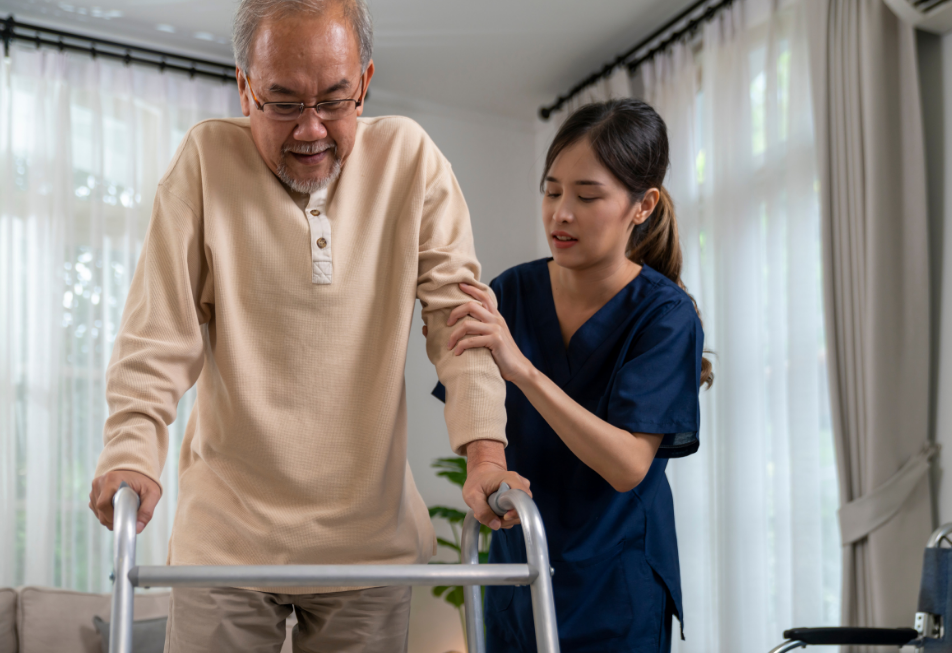
Rebuilding confidence after a fall
The emotional effects of a fall are often overlooked.
A person may become anxious about walking, using stairs or leaving the house. This can lead to reduced activity levels, which may increase weakness and make future falls more likely.
According to the Centre for Ageing Better, fear of falling can reduce quality of life and wellbeing, even when a fall has not caused a serious injury.
Providing reassurance, encouragement and appropriate support can help people regain confidence over time.
How physiotherapy can help after a fall
Physiotherapy is often an important part of recovery.
A physiotherapist can assess strength, balance and mobility before creating a rehabilitation programme tailored to the individual.
This may include:
- Strength exercises
- Balance training
- Walking practice
- Falls prevention advice
- Mobility exercises
Research shows that exercise programmes designed to improve strength and balance can reduce the risk of future falls.
Home physiotherapy can be particularly helpful because exercises can be linked to everyday activities within the home environment.
When is rehabilitation needed?
Some people recover independently after a fall. Others may benefit from structured rehabilitation support.
Rehabilitation may be recommended if a person:
- Has become weaker following a fall
- Has experienced a fracture
- Has reduced mobility
- Has lost confidence
- Is struggling with daily activities
- Has spent time in hospital
The goal is to help people regain as much independence as possible.
Supporting an older person after a fall
Family members often play an important role during recovery.
Practical ways to help include:
- Encouraging gentle movement
- Attending appointments if needed
- Ensuring the home is safe
- Supporting physiotherapy exercises
- Helping rebuild confidence
- Watching for changes in mobility
Patience is important. Recovery may take longer than expected, particularly for older adults with existing health conditions.
Can someone fully recover after a fall?
Many older adults make a good recovery after a fall, particularly when support is provided early.
The outcome will depend on factors such as overall health, age, injury severity and access to rehabilitation.
The focus should not only be on recovering from the fall itself, but also on restoring confidence, strength and independence.
How Independent People Homecare can help
At Independent People Homecare, we are the only UK live-in care provider to integrate free physiotherapy rehabilitation exercises into personalised care plans. Our physiotherapist and care team work together to support mobility, confidence and independence at home.
Find out how our live-in care and physiotherapy support could help you or a loved one. Call 0808 3040503 or request your free brochure today.