
Home rehabilitation is a form of support that helps people recover from illness, injury, surgery or a hospital stay in their own home. It can include physiotherapy, mobility support and assistance with daily activities to help people regain confidence and independence.
For many people, returning home after an illness or operation is only the beginning of the recovery process. Rehabilitation can help rebuild strength, improve mobility and support a safe return to everyday life.
This article explains what home rehabilitation is, how it works and who may benefit from it.
What does home rehabilitation involve?
Home rehabilitation is designed around the individual’s needs and recovery goals. Support may be provided by healthcare professionals, carers or a combination of both.
Depending on the person’s circumstances, home rehabilitation may include:
- Physiotherapy exercises
- Walking practice
- Strength and balance training
- Support with daily activities
- Falls prevention advice
- Mobility support
- Recovery after surgery
- Rehabilitation after illness or injury
Who can benefit from home rehabilitation?
Home rehabilitation can help people of all ages, but it is particularly common among older adults. It may be recommended for people who are:
- Recovering after surgery
- Returning home after a hospital stay
- Recovering from a fall
- Living with reduced mobility
- Recovering after a stroke
- Managing a long term health condition
- Experiencing frailty
The support provided will depend on the person’s individual needs and recovery goals.
Why is rehabilitation important after a hospital stay?
Many people experience weakness after spending time in hospital. Even short periods of reduced activity can affect strength, balance and confidence.
Home rehabilitation can play an important role in helping older people regain strength, confidence and independence after illness or injury. Falls are one of the most common causes of injury among older adults, and their impact can be significant.
According to the Centre for Ageing Better, 50% of people who experience a hip fracture are no longer able to live independently afterwards. Rehabilitation can help people rebuild mobility and return to the activities that matter to them.
Without rehabilitation, some people may find it harder to return to the activities they were able to do before becoming unwell.
What are the benefits of home rehabilitation?
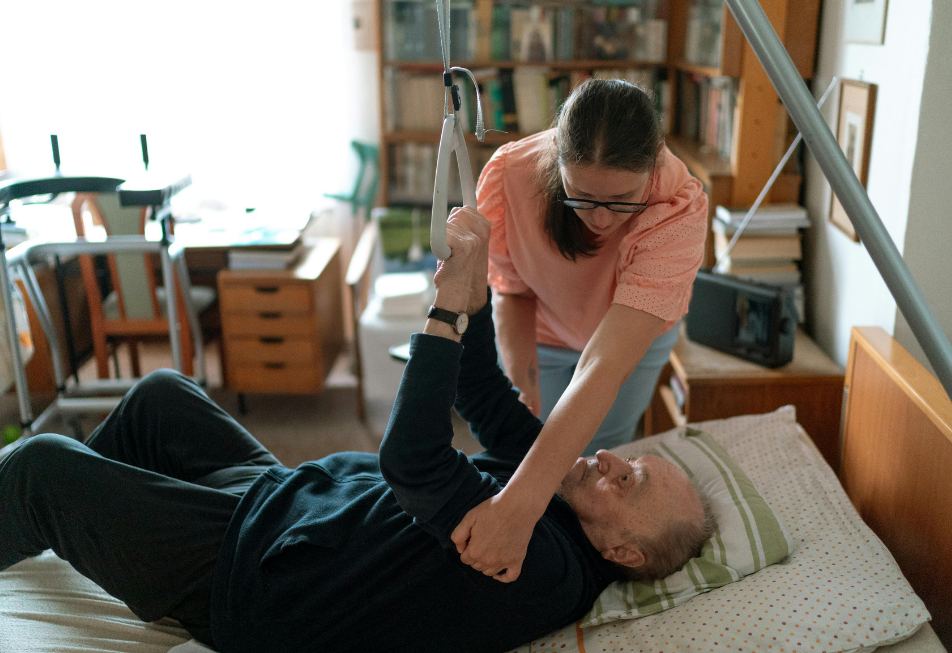
One of the main benefits of home rehabilitation is that recovery takes place in familiar surroundings. This allows support to focus on the activities that matter most in everyday life.
Home rehabilitation can help people:
- Improve strength and mobility
- Build confidence after illness or injury
- Reduce the risk of falls
- Regain independence
- Return to daily routines
- Remain in their own home for longer
For many people, practising movements and activities in their own environment feels more relevant than carrying them out in a clinical setting.
Home rehabilitation and physiotherapy
Physiotherapy is often an important part of home rehabilitation. A physiotherapist can assess mobility, balance and strength before creating a personalised rehabilitation programme.
This may include exercises designed to improve:
- Walking ability
- Balance
- Coordination
- Joint movement
- Muscle strength
The programme can then be adapted as the person’s recovery progresses.
How long does home rehabilitation last?
The length of home rehabilitation varies from person to person. Some people may only require support for a few weeks following surgery or illness.
Others may benefit from longer term rehabilitation if they are living with a condition that affects mobility or physical function.
Recovery is often gradual. Progress may happen over weeks or months depending on the individual’s circumstances.
Home rehabilitation and live-in care
For some people, rehabilitation works best when it is supported throughout the day.
A live-in carer can help encourage mobility, support physiotherapy exercises and assist with daily activities while a person recovers.
This can help people continue practising skills and routines between rehabilitation sessions.
It can also provide reassurance for families who are concerned about a loved one’s safety or wellbeing.
How Independent People Homecare can help
At Independent People Homecare, we are the only UK live-in care provider to integrate free physiotherapy rehabilitation exercises into personalised care plans. Our physiotherapist and care team work together to support mobility, confidence and independence at home.
Find out how our live-in care and physiotherapy support could help you or a loved one. Call 0808 3040503 or request your free brochure today.