
If someone you care about has dementia, you may wonder whether they need nursing care as well as help with everyday tasks. The answer depends on their individual needs. Some people mainly need support with washing, dressing, meals and getting around safely, while others may need nursing assessment, treatment or clinical oversight.
Dementia itself doesn’t determine the type of care someone needs. Health conditions they have alongside dementia, and changes in their needs over time, can also affect the support that is right for them. Nursing care may be available at home, through NHS community services or as part of a care home with nursing.
If a GP or hospital team has mentioned “nursing care” or a “nursing home”, it is understandable to be unsure what they mean. A useful question to ask is: which of this person’s needs require a nurse, and which needs can trained carers safely meet?
This guide explains the difference between personal and nursing care, when nursing support may be needed, what nursing care at home can look like and how the funding options work.
Personal care vs nursing care: what’s the difference?
Personal care is the practical support someone needs with everyday life. Nursing care involves health needs that require the knowledge, assessment and judgement of a registered nurse.
The two often work alongside each other rather than being separate choices.
| Type of care | What it includes | Who provides it |
| Personal care | Washing, dressing, continence support, mealtimes, moving safely, supervision and reassurance, and medication support where this has been assessed and agreed in the care plan. | Trained carers, including live-in carers |
| Nursing care | Assessing health needs, planning and reviewing clinical care, and tasks that require a nurse’s judgement, such as complex wound or catheter care. | Registered nurses: district nurses, care-home nurses, or nurses overseeing a nurse-led package at home |
The Care Quality Commission’s definition of nursing care describes it as care provided by a registered nurse that involves providing, planning, supervising or delegating care.
A person might, for example, need a carer to help them get dressed while a community nurse manages a wound. Their care plan should make clear who is responsible for each part of their support and how the different professionals work together.
Does dementia itself mean nursing care is needed?
A dementia diagnosis is only one part of the picture when deciding what care someone needs. Two people with the same type of dementia can have very different health and care needs, and those needs can change over time.
As dementia progresses, some people develop difficulties with mobility, continence, eating and swallowing. They may also have other health conditions that need closer monitoring or treatment.
The important question is what the person needs help with now, and whether those needs can be safely managed at home.
This might involve looking at their daytime and overnight needs, mobility and moving and handling, equipment, medication, clinical input and the support available from family or care professionals.
For some people, these needs can be managed at home with carers and input from NHS community nurses or other healthcare professionals. For others, a care home with nursing may provide a more suitable level of support.
Signs someone with dementia may need nursing care
Certain changes may mean it is worth asking a GP, district nurse or other healthcare professional for a review. These can include:
- Pressure sores or wounds that are not healing
- A catheter that needs changing or is causing repeated problems
- Injections or other treatments that a carer cannot safely be trained to provide
- Swallowing difficulties that need specialist assessment, or the use of a feeding tube. NICE advises against routine tube feeding in severe dementia, unless a potentially reversible condition is also present
- Another health condition, such as heart failure, diabetes or COPD, becoming unstable
- Symptoms towards the end of life that need specialist management
These changes do not automatically mean that someone needs to move into a nursing home. They are reasons to ask whether their current care arrangements are still meeting their needs.
A GP can arrange appropriate referrals, which may include district or community nursing, the memory service or other specialist teams. Where health needs are significant, they can also advise on an NHS Continuing Healthcare assessment.
If someone becomes suddenly confused or much more unwell than usual, seek urgent medical help. The NHS advises going to A&E or calling 999 for sudden confusion, as there may be an underlying condition that needs prompt treatment.
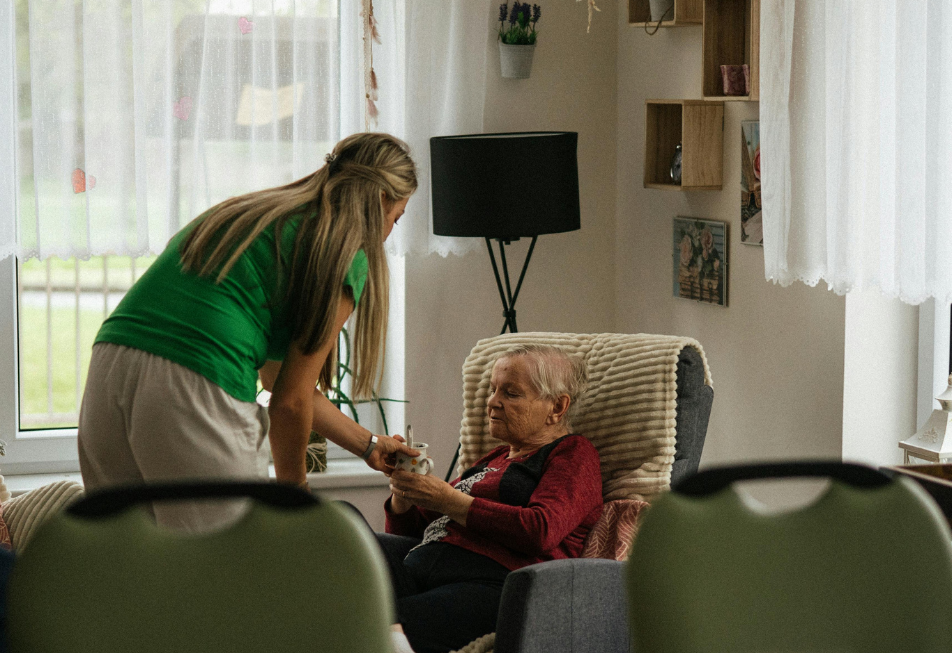
Nursing care at home: what’s possible
Nursing care does not necessarily mean moving into a nursing home. Depending on the person’s needs, some nursing support can be provided alongside care at home.
NHS community nursing and nurse-led live-in care have different roles, but they can work together. The key is making sure everyone understands what support is needed, who is providing it and when a nurse needs to be involved.
NHS district nurses
District nurses visit people in their own homes to provide nursing care such as wound care, injections, catheter care and end-of-life support.
A GP or hospital team will usually make the referral, and NHS district nursing is free.
Nurse-led live-in care
Independent People Live-in Care provides nurse-led complex care in England as a fully managed service.
The process starts with an assessment of the person’s health and care needs. Registered nurses oversee the package, while a live-in carer provides day-to-day personal care and support. The nurse continues to review the package as needs change.
Where a nurse decides that a particular healthcare task can safely be delegated, the carer can be trained and competency-assessed to carry it out for that individual, with a clear route for escalating concerns.
Independent People Live-in Care is CQC-registered for Treatment of Disease, Disorder or Injury, alongside personal care, and was rated Good in its latest report in December 2024.
There are some important boundaries. A live-in carer is not a nurse, so nurse-led care does not mean having a registered nurse living in the home. Some tasks will still need a district nurse or another healthcare professional to visit.
Our explainer on what complex care means explains more about how this type of care is assessed and managed.
Live-in care with nurse-led oversight vs a nursing home
Both options can work well, depending on the person’s needs and what they want from their care.
With nurse-led live-in care, the person stays in their own home with one-to-one support from a live-in carer, alongside nurse assessment and oversight. A care home with nursing provides accommodation, care and access to registered nurses on site.
| Consideration | Live-in care with nurse-led oversight | Care home with nursing |
| Setting | The person’s own home | A shared home with staff and other residents |
| Day-to-day care | One main carer, with planned breaks and cover | A team of care staff working in shifts |
| Nurse presence | Nurses assess, oversee and review; carers deliver care; district nurses visit for non-delegated tasks | Registered nurses on site around the clock |
| Routine | Follows the person’s existing routine; ask how changing needs would be met | Ask how the home accommodates individual routines and preferences |
| Couples | Both can stay at home; ask how each partner’s needs would be met | Ask whether couples’ rooms exist and how each partner’s needs would be met |
| When it may suit | Needs can be managed with nursing oversight and visits, and the person wants to stay at home | A nurse is needed on the premises at all times, or home is no longer safe or practical |
A live-in carer lives in the home but needs sleep and regular breaks, so live-in care is different from waking night care.
There is no right answer for every family. It can help to compare care homes and live-in care alongside the person’s health needs, preferences and what is practical for the people supporting them.
Our guide to how long someone with dementia can live at home also looks at the factors that can affect this decision.
End-of-life care for someone with dementia
Towards the end of life, care usually involves several people working together. This may include the GP, district nurses, a specialist palliative care team and the carers who know the person well.
Live-in carers can provide comfort and personal care, help with positioning, offer company and support eating and drinking in line with the person’s care plan and any swallowing guidance. Nurses and palliative care professionals manage clinical needs, including medicines and symptom control.
If someone is deteriorating quickly and may be entering the terminal phase of an illness, an appropriate clinician can complete the NHS Continuing Healthcare fast-track tool. Where the criteria are met, the integrated care board should normally arrange the care within 48 hours of receiving the completed tool, rather than 48 hours from the family’s first enquiry.
Our palliative care at home page explains more about support at this stage.

Who pays for nursing care?
Funding depends on where the person lives and the level and type of care they need. A dementia diagnosis alone does not determine whether someone is eligible for NHS or local authority funding.
In England, the main routes include:
- NHS Continuing Healthcare (CHC): This is NHS-funded care for adults whose needs are assessed as primarily health needs. Eligibility is based on the nature, complexity, intensity and unpredictability of a person’s needs, rather than a particular diagnosis. Dementia does not automatically qualify someone for CHC or rule them out. Needs such as cognition, behaviour and nutrition are considered alongside nursing and other healthcare needs. Where someone is eligible, CHC can fund care at home, including live-in care, or in a care home. Our page on how CHC works explains the process. Our CHC questionnaire is for informal guidance only and does not determine NHS eligibility.
- NHS-funded Nursing Care (FNC): This is an NHS contribution paid directly to a care home with nursing towards the registered nursing element of the fees. It does not apply to nursing care provided at home.
- Local authority support: Following a needs assessment and financial assessment, the council may contribute towards care at home or in a care home.
- Benefits: Attendance Allowance helps people over State Pension age with the extra costs associated with needing care. It is not means-tested.
The arrangements are different in Scotland and Wales. Scotland replaced CHC with Hospital Based Complex Clinical Care in 2015, while Wales has its own Continuing NHS Healthcare framework.
Because funding rules can change, check the current position for the part of the UK where the person lives. Our guides to funding your care and live-in dementia care costs cover the options in more detail.
Frequently asked questions
What is the difference between personal care and nursing care?
Personal care is help with everyday activities such as washing, dressing, eating and moving safely. Nursing care is for health needs that require a registered nurse’s skills, assessment or clinical judgement, such as managing a complex wound. Many people need both.
Can someone with dementia get nursing care at home?
Yes. NHS district nurses can visit someone at home for tasks such as wound or catheter care. Nurse-led live-in care can also combine day-to-day support from a live-in carer with registered nurse assessment and oversight. Some needs may require more specialist or frequent nursing input, so an assessment is important.
When should someone with dementia move to a nursing home?
This depends on their health and care needs, rather than the dementia diagnosis itself. A nursing home may be appropriate when the person’s needs require a nurse to be available on site or can no longer be managed safely at home, even with additional support.
It is a decision to make with the person’s GP, social worker or care team, taking into account their wishes and what is practical for everyone involved.
Does NHS Continuing Healthcare cover dementia care?
It can. CHC is based on whether the person’s needs are assessed as primarily health needs, not on whether they have a particular diagnosis. Dementia does not automatically qualify someone or rule them out.
Where someone is eligible, CHC can fund care at home, including live-in care, or in a care home.
Does NHS-funded nursing care pay for nursing at home?
No. NHS-funded nursing care is paid directly to an eligible care home with nursing towards the registered nursing element of the fees. It does not cover nursing care provided at home.
Nursing at home may instead be provided by NHS district nurses or funded through NHS Continuing Healthcare if the person is eligible.
Talk to us about dementia care at home
If you’re trying to work out what kind of care someone needs, you do not have to have all the answers before you ask for advice.
Independent People Live-in Care can talk through the person’s health and day-to-day needs and explain how dementia live-in care and nurse-led support could work at home.
Call 0800 471 4741 to talk through the options, enquire online or download a brochure.