
There can be a lot to think about when getting your home ready for live-in care, particularly if you’re arranging care for your mum, dad or another loved one for the first time.
The good news is that you don’t need to have everything worked out before you get started. Independent People Live-in Care will talk through your loved one’s needs, their usual routines and the home they live in, then help you work out what needs to be in place before their carer arrives.
There are a few things worth thinking about ahead of time, from the carer’s bedroom and bathroom arrangements to any equipment, paperwork and everyday household routines.
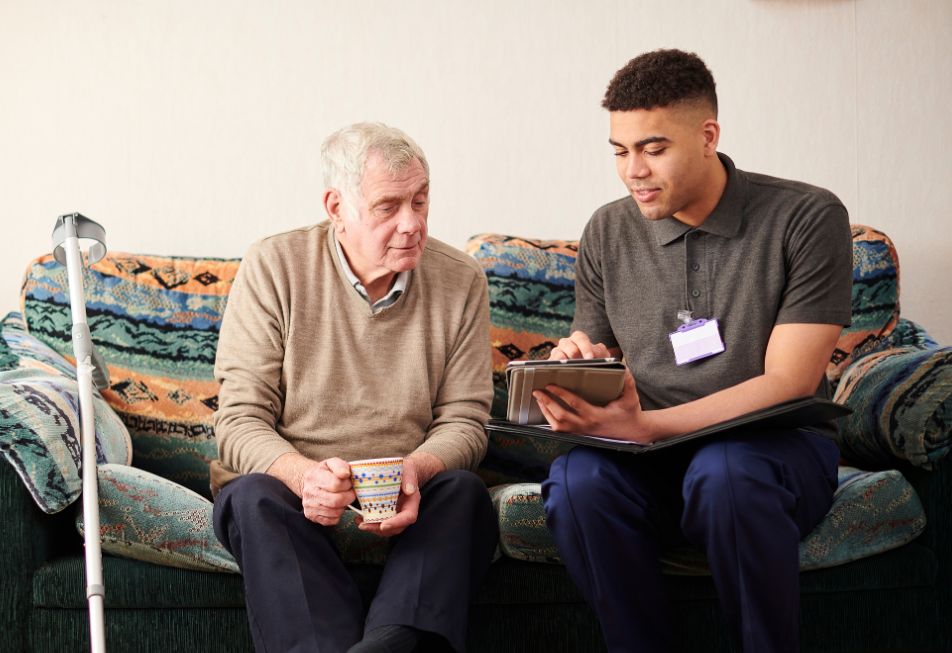
Before you start: the care assessment
Your care assessment is a chance to talk openly about what your loved one needs help with and what life at home looks like now.
You can discuss their usual routine, how they move around the house, what support they need during the day and night, and anything that might make having a live-in carer easier or more difficult.
It’s important that your loved one has a say in their care wherever possible. Their preferences, routines and privacy should all form part of the conversation.
The assessment will help create a live-in care plan that explains the support they need and how their carer will help. You can also read more about how live-in care works and what to expect from the first conversation onwards.
Setting up your carer’s room
A live-in carer needs their own private bedroom where they can sleep, relax and have some time to themselves.
It doesn’t need to be a large room. It just needs to be comfortable and suitable for someone to live in. Ideally, it should have:
- A comfortable bed
- Enough storage for clothes and personal belongings
- Good lighting
- Reliable Wi-Fi so your carer can keep in touch with family and the care team
Your carer will also need access to a bathroom. A separate bathroom is helpful but isn’t essential, as long as sharing is comfortable and the arrangements work for everyone in the household.
If you’re worried that your home may not have enough space, talk to us before ruling live-in care out. We can talk through your options and what your carer will need.
You can also read more about what a live-in carer needs in your home.
Making your home safe and comfortable
Your loved one should be able to move around their home as safely and comfortably as possible. Sometimes that means making small changes rather than carrying out major adaptations.
Things worth checking include:
- Hallways and stairs: Keep walkways clear, secure loose rugs and make sure stair rails are firmly fixed. Good lighting is particularly important on stairs and at night.
- Bathroom: If your loved one finds getting in and out of the bath or shower difficult, talk about this during the assessment. An occupational therapist (OT) can advise on equipment such as grab rails, shower chairs or raised toilet seats.
- Bedroom: Keep a lamp within easy reach of the bed and make sure there is a clear route to the bathroom. A night light may also help.
- Fire safety: Check that smoke, heat and carbon monoxide alarms are suitable for your home and test them as recommended by the manufacturer. Your local fire and rescue service may also offer home fire safety advice. Homes in Scotland have specific interlinked alarm requirements.
The right changes will depend on your loved one and their circumstances. You can find more advice in our guides to recovering after surgery, live-in care after repeated falls and dementia home safety.
Getting an occupational therapy home assessment
An occupational therapist can look at how your loved one manages everyday activities at home and recommend equipment or changes that could make things easier and safer.
In England, you can ask your local council’s adult social care team about a free home assessment. In Scotland, contact your council’s social work department, and in Wales, its social services team.
If your loved one is in hospital, the ward’s therapy team may also be able to help arrange an assessment before discharge.
Equipment: what might you need?
Not everyone who receives live-in care needs specialist equipment.
If equipment is needed, an occupational therapist, district nurse or community equipment service will usually recommend what is appropriate. The important thing is that the right equipment is in place and that carers know how to use it safely.
| Equipment | Who it may help | How it is usually arranged |
|---|---|---|
| Profiling (adjustable) bed | Someone who needs help sitting up or changing position | An OT or district nurse may recommend one through an equipment service or private hire |
| Hoist and slings | Someone who cannot stand or transfer safely | An OT or physiotherapist can assess what is needed and agree a moving and handling plan |
| Personal alarm or telecare | Someone who may spend time alone | Through a council telecare service or private provider |
If your loved one needs help moving or transferring, the care team should have a clear moving and handling plan. Carers should be trained and competent to follow it.
If a particular task needs two people, such as a transfer, it needs to be planned in advance rather than relying on one carer to manage it alone.
If you’re unsure what equipment your loved one might need, talk to Independent People Live-in Care as part of your free care assessment. Call the friendly team on 0800 471 4741.
Thinking about everyday life
Once you’ve considered the practical side of the home, it’s worth thinking about what day-to-day life will look like when someone new is living there.
Food and kitchen space
Your carer will need access to the kitchen, as well as some cupboard and fridge space for their own food.
Talk about how meals and shopping will work before care begins. Your care team can explain what is included in your particular care arrangement.
Breaks and rest
Live-in carers need proper time to rest during the day and a good night’s sleep. The care plan should take account of their breaks and any support your loved one needs while their carer is taking them.
If your loved one needs someone awake and available throughout the night, live-in care on its own may not be the right arrangement. Talk to us about whether overnight care or 24-hour care would be more suitable.
Housework
A live-in carer can usually help with everyday household tasks such as vacuuming, dusting, mopping, changing bedding and emptying bins.
They won’t be expected to take on heavy cleaning, gardening or repairs. The care plan will make clear which household tasks your carer can help with.
Knowing your home
It can be useful to show your carer where things such as the stopcock, fuse box and boiler controls are.
Pets
There’s no need to assume that having a pet means live-in care won’t work. Tell us about your pets during the assessment so we can take them into account when finding the right carer. You can also read our guide to live-in care and pets.
Household administration
There are a few practical things worth checking before your carer moves in.
You may need to tell your home insurer that someone will be living in the property. If your carer will drive your loved one’s car, check that they are covered by the motor insurance too. You can also ask your council whether having a live-in carer affects any council tax discount.

Getting the paperwork together
You don’t need to create a mountain of paperwork. It’s simply helpful to make sure important information is easy to find if your loved one or their carer needs it.
This might include:
- A current list of medicines, including doses, times and any allergies
- GP, pharmacy and other healthcare contact details
- Your loved one’s NHS number, or Community Health Index (CHI) number in Scotland, if available
- Emergency contact details for family and the care team
- Any Lasting Power of Attorney, or Power of Attorney in Scotland
- Existing emergency care documents, such as an advance care plan, DNACPR form or ReSPECT plan, where these already exist
- Information about who has access to the home, including key safe details if there is one
Keep medicines somewhere appropriate and follow any storage instructions from the pharmacist or healthcare team.
Your loved one’s wishes should always guide who has access to their personal information and care documents.
If you have a power of attorney and live-in care arrangements to consider, we have more information available.
Helping everyone feel comfortable
Getting the house ready is important, but so is getting everyone ready for the change.
Having someone new live in your home can take some getting used to. Talk to your loved one about what will happen, introduce them to the idea of having a carer around and explain how the arrangement will work.
A simple “about me” page can be a lovely way to help your carer get to know them. You could include their usual routine, how they like their tea, the people and places that matter to them, things they enjoy and anything they would rather avoid.
The more your carer knows about your loved one as a person, the easier it can be to build a comfortable relationship.
It’s also worth agreeing how the family will stay in touch. Decide who the main family contact will be, how often you’d like updates and who to call if something changes.
If your mum or dad is unsure about accepting care, our guides to talking about care and what to do when a relative refuses care may help.
Your pre-arrival checklist
Before your carer arrives, it can help to run through the following:
- Private bedroom ready for your carer: bed, storage, lighting, Wi-Fi
- Bathroom and kitchen arrangements agreed
- Walkways clear, rugs secured, lighting checked, alarms tested
- Any recommended adaptations completed and essential equipment ready for use
- Breaks, time alone and night-time support agreed with the care team
- Medicines storage agreed; care information to hand (medicines list, GP details, NHS or CHI number, emergency contacts)
- Existing care documents, emergency care plans and power of attorney available, where applicable
- Access arrangements agreed, including a key safe if needed; insurers informed
- “About me” page written with the person; family contact arrangements agreed
You don’t have to work through all of this on your own. Your care team can help you understand what applies to your loved one and what can wait until later.
The day your carer arrives
The first day doesn’t need to be complicated. Introductions, a cup of tea, a tour of the house and some time to talk through your loved one’s usual routine can be enough to get things started.
It’s natural for everyone to need a little time to settle into a new routine. Your carer will be getting to know your loved one, their home and the things that matter to them.
Our guide to what happens in the first week of live-in care explains more about those early days.
Frequently asked questions
Does a live-in carer need their own room?
Yes. A live-in carer sleeps in the home and has their own bedroom, with a comfortable bed, storage and good lighting. If you are unsure whether your spare room will work, call the team.
Does a live-in carer need their own bathroom?
A separate bathroom is not essential. One is ideal where the house allows, but sharing works well with arrangements agreed at the assessment, such as a routine for mornings and evenings.
What should we agree about the carer’s meals and shopping?
Arrangements for your carer’s meals and shopping are agreed before care starts, and your care team will explain how this works for your package. In every case, the carer needs kitchen access and some cupboard and refrigerator space for their own food.
Do I need special equipment before live-in care starts?
Not always. Many people start with simple changes such as grab rails, a shower chair or better lighting. Where more is needed, an OT or district nurse usually assesses and arranges it, and your care assessment will identify what applies.
How quickly can we be ready for live-in care?
It depends on the home and the person’s needs. A bedroom, cleared cupboard space and care information can often be organised quickly; adaptations and equipment may take longer to arrange. The process starts with a free care assessment, and in urgent situations care can sometimes be arranged at short notice, depending on availability.
How Independent People Live-in Care can help
Preparing your home is just one part of getting ready for live-in care.
Independent People Live-in Care can help with the wider process, from the initial assessment and care planning to finding a carer who is a good personality match for your loved one.
We’ll talk to you about what your family needs, answer your questions and help you understand what happens next. If your loved one has dementia or Alzheimer’s, we can also talk through the specialist support they may need.
If you need care sooner than expected, you can ask about emergency live-in care availability. You can also find out more about live-in care costs and what can affect the price.
If you’re not sure whether your home is suitable for live-in care, call Independent People Live-in Care on 0800 471 4741.
Someone will be here to answer your questions and talk through what your loved one needs. You don’t need to have everything figured out before you call.