
Recognising the signs of end of life cancer can be challenging, especially as changes often happen gradually. For many families, understanding what is happening can bring some reassurance and help you provide the right support at the right time.
End of life care is focused on comfort, dignity and quality of life, whether this takes place at home, in a hospice or in hospital.
What happens at the end of life with cancer?
In the final stages of cancer, the body begins to slow down. Energy levels drop, systems become less efficient and the need for rest increases. Medical treatment may reduce or stop altogether, with care shifting towards managing symptoms and ensuring comfort.
These changes are a natural part of the process, although they can still feel difficult to witness.
Physical signs to look out for
There are several physical signs that may indicate someone is approaching the end of life. Not everyone will experience all of these, and the timing can vary.
Increasing tiredness and sleeping more
It is common for someone to sleep for longer periods and have very little energy when awake. They may need help with most daily activities and may become less responsive over time.
Changes in eating and drinking
Appetite usually decreases, and the person may eat or drink very little. This can be hard for families to see, but it is a normal part of the body preparing for the end of life.
Breathing changes
Breathing may become slower, irregular or shallow. Some people develop a rattling sound due to a build-up of fluids. While this can sound distressing, it is not usually uncomfortable for the person.
Reduced mobility
Movement often becomes more limited. The person may stay in bed or need full support to move or change position.
Changes in skin and circulation
Hands and feet may feel cold, and skin can appear pale or slightly mottled as circulation slows.
Changes in awareness and behaviour
As the body slows down, there are often noticeable changes in awareness and behaviour.
Some people may become:
- Quieter and less communicative
- More withdrawn or less interested in surroundings
- Confused or disorientated at times
- Restless or unsettled, especially at certain times of day
Others may have moments of clarity, wanting to talk or reflect. These changes can come and go.
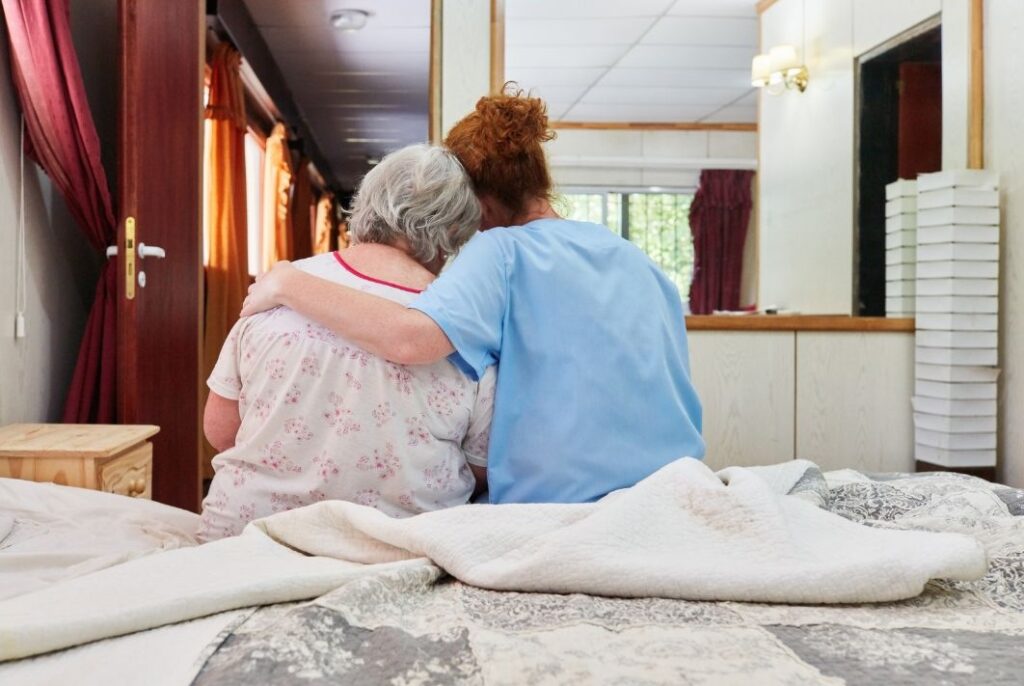
Emotional and psychological signs
End of life can bring a range of emotional responses, both for the person and their loved ones.
You may notice:
- A need for reassurance or closeness
- Periods of anxiety or low mood
- A desire to talk about memories, life events or unfinished matters
- A preference for quiet and calm rather than conversation
Simply being present, listening and offering comfort can be incredibly valuable during this time.
Practical ways to provide comfort
Supporting someone at the end of life is not about doing everything perfectly. Small, thoughtful actions can make a meaningful difference.
You can help by:
- Keeping the person comfortable with pillows and gentle repositioning
- Maintaining a calm, quiet environment
- Offering sips of water or moistening the mouth if appropriate
- Speaking softly and offering reassurance
- Sitting with them, even in silence
Even if they do not respond, they may still be aware of your presence.
When changes happen quickly
In some cases, decline may happen more rapidly. Signs that someone may be very close to the end of life can include:
- Long periods of unresponsiveness
- Very irregular or paused breathing
- Minimal movement or reaction
- Significant changes in skin colour or temperature
If you notice these changes and feel unsure, it is always appropriate to contact a healthcare professional for guidance and reassurance.
Support for families and carers
Caring for someone at the end of life can be emotionally and physically demanding. It is important to remember that support is available.
You may find help from:
- District nurses and GPs
- Palliative care teams
- Hospice services
- Professional home care providers
These services can help manage symptoms, provide advice and ensure both the person and their family feel supported.
Final thoughts
The signs of end of life cancer can be difficult to recognise and even harder to accept. Every person’s experience is different, but understanding the common changes can help you feel more prepared and able to provide comfort.
You are not alone in this process. With the right support, it is possible to ensure dignity, peace and care during the final stages of life.
Need support with end of life care at home?
If you are caring for a loved one with advanced cancer, our team can help. We provide compassionate live-in cancer care focused on comfort, dignity and reassurance in the familiar surroundings of home.
Call 0808 304 0500 or email hello@iphomecare.co.uk to arrange a free, no obligation discussion.