
As we get older, staying active becomes increasingly important for maintaining independence, confidence and overall wellbeing. Gentle movement and regular mobility exercises can help older adults improve balance, flexibility and strength, making everyday activities feel safer and easier.
At Independent People Homecare, we understand that keeping mobile is not always simple. Health conditions, reduced confidence and lifestyle changes can all affect physical activity levels. However, even small amounts of movement can make a meaningful difference.
According to Sport England, 42 per cent of people aged 55 and over are inactive, compared to 29 per cent of the wider adult population. With the number of people aged 60 or over expected to exceed 20 million by 2030, supporting healthy ageing through movement is more important than ever.
Why mobility exercises matter for older adults
Mobility exercises help keep joints flexible, muscles active and the body moving comfortably. Regular movement can support:
- Better balance and coordination
- Reduced risk of falls
- Improved flexibility
- Increased strength
- Greater independence
- Better circulation
- Improved confidence and mood
Many older adults believe slowing down is simply part of ageing. While the body naturally changes over time, staying active can help people maintain mobility and quality of life for longer.
Simple mobility exercises for elderly people
Mobility exercises do not need to be intense or exhausting. Gentle and consistent movement is often the most effective approach.
Before starting any new exercise routine, it is important to speak with a GP or healthcare professional, especially if there are existing medical conditions or mobility concerns.
Seated leg lifts
Seated exercises are a good starting point for people with limited mobility or reduced confidence.
To perform a seated leg lift:
- Sit comfortably in a sturdy chair
- Slowly straighten one leg in front of you
- Hold for a few seconds
- Lower gently back down
- Repeat on the other leg
This exercise can help strengthen leg muscles and improve circulation.
Ankle rotations
Ankle mobility is important for balance and walking safely.
While seated:
- Lift one foot slightly from the floor
- Slowly rotate the ankle in circles
- Change direction after a few rotations
- Repeat with the other foot
Gentle ankle exercises can help improve flexibility and reduce stiffness.
Shoulder rolls
Shoulder tension and stiffness are common as we age.
To loosen the upper body:
- Sit or stand comfortably
- Slowly roll shoulders forwards in a circular motion
- Repeat several times
- Reverse the direction
This can help improve posture and ease tension.
Gentle walking
Walking remains one of the best forms of exercise for older adults.
Even short daily walks can support heart health, balance and mobility. Some people may benefit from walking with support from a family member, carer or mobility aid.
Walking slightly further or at a steadier pace than usual can also provide health benefits.
Sit to stand exercise
This exercise helps strengthen muscles needed for everyday activities such as getting out of chairs and climbing stairs.
To perform safely:
- Sit in a sturdy chair
- Place feet flat on the floor
- Slowly stand up using the legs as much as possible
- Carefully sit back down again
- Repeat slowly several times
This exercise can improve lower body strength and stability.
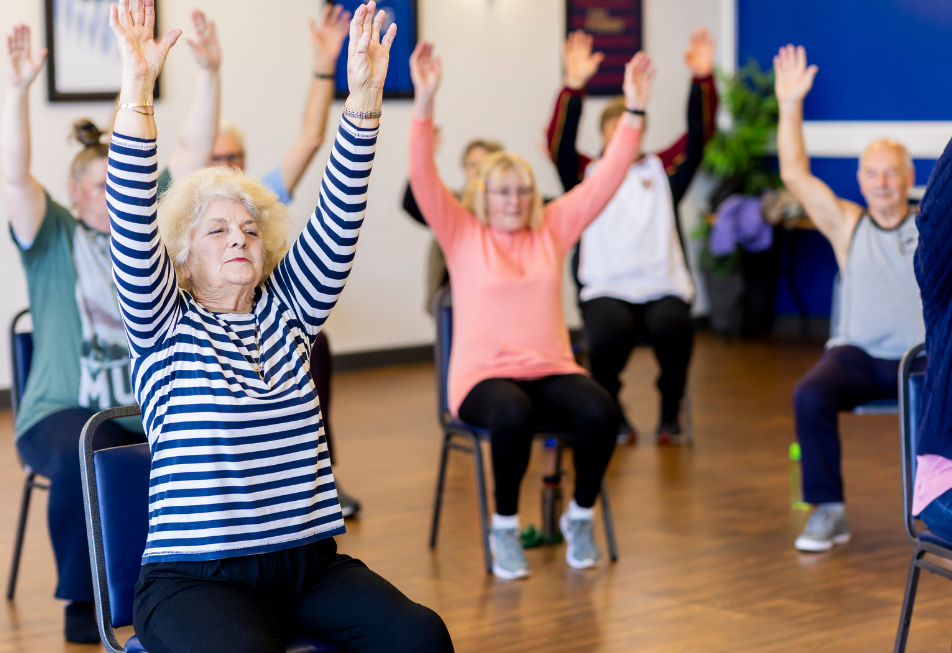
Stretching exercises
Gentle stretching can help reduce stiffness and improve flexibility.
Simple stretches for the arms, neck and legs may help older adults move more comfortably throughout the day.
Stretching should always feel gentle and never painful.
Tips for exercising safely
When carrying out mobility exercises, safety should always come first.
Start slowly
Small amounts of movement are better than doing too much too quickly. Gradually building activity levels can help prevent strain or injury.
Use support if needed
Chairs, rails or walking aids can provide extra confidence and stability during exercises.
Wear comfortable clothing
Loose fitting clothing and supportive footwear can help movement feel easier and safer.
Stay consistent
Gentle daily movement is often more beneficial than occasional intense exercise.
UK resources that support mobility in elderly people
There are many organisations across the UK that provide advice, exercise programmes and practical support to help older adults stay active and independent.
NHS physical activity guidance
The NHS recommends that adults aged 65 and over stay physically active every day where possible. This includes activities that improve strength, balance and flexibility, which are all important for maintaining mobility and reducing the risk of falls.
The NHS website offers simple exercise ideas for older adults, including walking, stretching and balance exercises that can be adapted to different mobility levels.
Age UK exercise and falls prevention support
Age UK provides a wide range of resources designed specifically for older adults who want to improve mobility and confidence.
Their guidance includes:
- Chair based exercise sessions
- Walking advice for older adults
- Balance and strength exercises
- Falls prevention support
- Functional fitness activities for everyday movement
Many local Age UK branches also run community exercise classes, helping older adults stay active while reducing social isolation.
NICE falls prevention guidance
The National Institute for Health and Care Excellence, known as NICE, provides guidance on falls prevention and mobility support for older adults.
Their recommendations focus on:
- Strength and balance exercises
- Mobility assessments
- Reducing fall risks at home
- Supporting independence
- Encouraging ongoing physical activity
Falls prevention programmes can help older adults remain confident and mobile for longer.
Local community classes and support groups
Many local councils, leisure centres and charities offer exercise opportunities for older adults, including:
- The Ramblers is a UK charity that encourages older adults to stay active through walking groups and guided walks across the country.
- Walking for Health also offers free organised walks across England, helping older adults improve mobility, confidence and social wellbeing through gentle physical activity.
- Later Life Training provides specialist exercise programmes designed for older adults, focusing on strength, balance and falls prevention.
How physiotherapy rehabilitation home care can support mobility
Staying active can become more difficult with age, especially after illness, surgery or a fall. Having the right support at home can help older adults improve confidence, mobility and independence safely.
At Independent People Homecare, we are the only live in care agency in the UK to integrate free physiotherapy exercises into personalised care plans.
Our physiotherapy rehabilitation home care service can help with:
- Improving strength and balance
- Reducing the risk of falls
- Supporting recovery after illness or surgery
- Encouraging safe daily movement
- Building confidence and independence
Our live in carers work alongside a resident physiotherapist to support older adults with gentle exercises tailored to their individual needs and abilities.
Learn more about our physiotherapy rehabilitation home care service and how it can support mobility and independence at home.
Looking for support with elderly care at home?
Independent People Homecare offers personalised home care services that support independence, mobility and wellbeing.
Call 0808 304 0500 to speak to our friendly team or email hello1787629129@ipho1787629129mecar1787629129e.co.1787629129uk1787629129 to arrange a free, no obligation discussion.